

Ecommerce vs Marketplace. Which one to choose?

Updated: Apr 24
Choosing between an e-commerce site and a marketplace is more of a strategic decision than a technical one. Understanding their differences and what each is used for is key to making the right choice.

When I was in high school, some of my friends started buying what was then the most advanced video game console: the Sony PlayStation 3. Those who were more Team Xbox bought the Xbox 360. And of course, there were those who, in addition to a monstrous console, also had a handheld like the Nintendo 3DS or the PSP. And how could I forget those who, even back then, were already dedicated to playing on a computer: the PC Master Race.
I'm getting sidetracked from my main point. To keep up and be able to play with my friends, I started looking for ways to make money. I began working weekends at wedding venues and… decided to start selling products on Mercado Libre.
That's how I was able to save enough money to buy my PS3 and eventually my first gaming desktop computer. The truth is, Mercado Libre isn't the same platform it was 15-20 years ago. Now it's a much more regulated marketplace , which provides security and trust for both buyers and sellers , but it also creates more obstacles and charges higher fees, so I'm not sure I could have achieved the same things in today's world as I did back in high school.
I know you're probably facing the same dilemma, so let's get right into it. Is it better for your business to launch its own e-commerce site, or is it better to rely on a marketplace like Mercado Libre or Amazon?
Table of contents
Advantages and disadvantages of ecommerce
Having your own e-commerce business has become a relatively simple goal to achieve, as it does not require the large web developments that a couple of decades ago it could still involve.
Advantages of having your own ecommerce
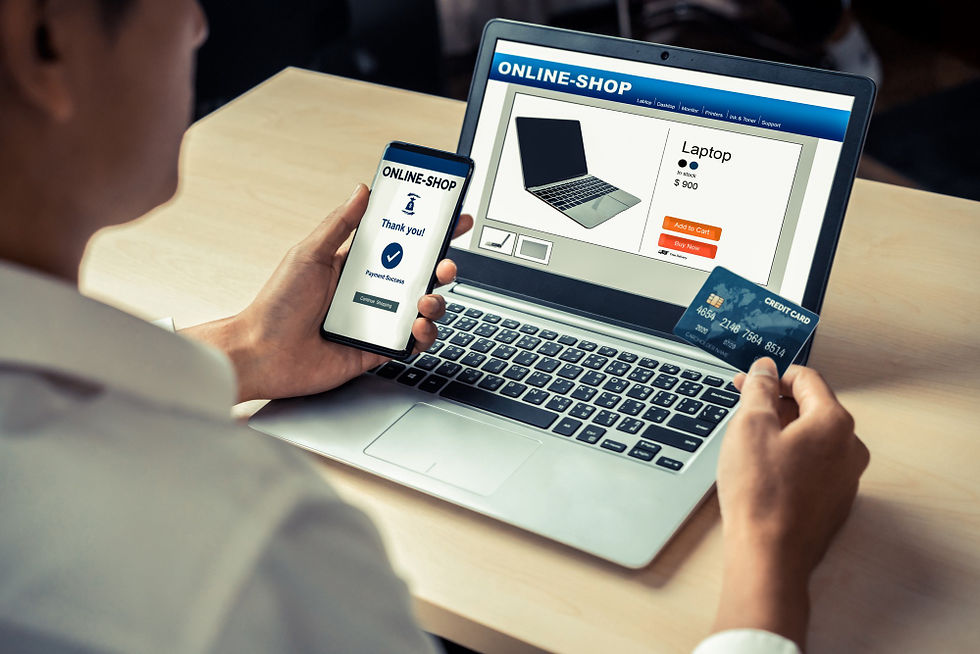
Currently, there are platforms like Shopify, WooCommerce, Magento, and many others that allow you to set up an online store, from uploading products to establishing logistics channels for shipping merchandise, in visually appealing templates.
The best part is that you have control and management of your online store. Just like the owner of the corner store decides what products to sell, on which shelves, at what price, and other decisions, you have that power on platforms like Shopify.
Furthermore, thanks to the multiple integrations that these builders have with other applications - let's say PayPal - it's even easier to have a fairly robust online store.
So far, so good. If setting up an e-commerce store on Shopify is that simple and seamless , there shouldn't be any problems, right?
Disadvantages of having your own ecommerce
The reality that many merchants encounter during the construction or even after the launch of their online store can be summarized in the following points:

Complex scalability: If your product offering is small (say, fewer than 25-50 SKUs initially), adding these products with their photos, descriptions, prices, etc., isn't much of a problem. However, if you eventually manage a larger number of products with multiple variations in color, size, material, and so on, you can quickly end up with a store with more than 1,000 SKUs. This, in turn, can not only slow down product uploads but also overall management, and can even increase the cost that platforms like Shopify charge you (such as a commission) for having your online store.
Traffic doesn't just happen: Unlike a marketplace, which we'll discuss later, having your own online store requires a greater effort to attract users. And that effort is entirely your responsibility. To achieve this, you'll need to use a comprehensive marketing strategy that allows you to generate attraction, retention, sales, and repeat purchases. This includes SEO, social media content, paid advertising, email marketing, and more. Otherwise, you're unlikely to achieve the desired success.
Technical dependency: As I mentioned, setting up an e-commerce site on these platforms is relatively simple, especially with a good, customizable template. The problem is that the more features and customization you add, the more complex the construction becomes, and when a problem arises (and I guarantee there will be problems), diagnosing and resolving it will be equally difficult. This is especially true considering that these problems will require technical support from the platform or, in the case of templates and plugins, from their developers.
Learning curves: Assuming that you, the reader of this article (thank you very much, by the way), are the one who built the e-commerce platform, you likely have a better understanding of it than others in your organization. Therefore, it will be up to you, or whoever set up the store, to properly train those who will have a role in its management. At Werko Marketing Solutions, when we carry out an e-commerce project (like the one for Euro Water Technologies ), we make sure to train the client and provide them with manuals and tutorial sessions so they can operate their store immediately upon delivery.
Brand trust: Unless your brand is already well-positioned in the market and your target audiences know you, you'll have to climb an uphill battle (as every brand does at the beginning) to achieve top-of-mind awareness . We already discussed this in point two, but it's not just about generating traffic; over time, through sales and after-sales service, you need to build a sense of security and trust in your brand.
Without having yet gone into the details of a marketplace, is the second option better?
Advantages and disadvantages of the marketplace
While there are many marketplaces that connect sellers and buyers, such as Amazon Mexico, Mercado Libre Mexico, Liverpool, Coppel, and many others, their inner workings are very similar. For the purposes of this section, I will use Amazon Mexico as an example .

The first thing to understand is that there are three main marketplace models on Amazon and other platforms , each with its own advantages and disadvantages. Secondly, whichever model you choose from the three I'll describe now—and understanding that some of these may not apply to marketplaces other than Amazon— one of the key aspects of these platforms is understanding how users search for products .
Yes, it's true. Having your products on Amazon or Mercado Libre can help users find them more easily by leveraging the traffic and trust these platforms already have. However, your competitors on the marketplace will also benefit from this. To outrank the competition, you need to understand how users search for products. In other words, you need to know which keywords to include in your product listings that match user searches. This concept is very similar to the well-known keywords used in Google Ads.
The topic of keywords could easily be an entire article in itself, but I just wanted to mention it briefly here so you understand that even within a marketplace, traffic to your products won't be automatic. Now, let's move on to...
Three different marketplace models:
Dropshipping
In this first model, the marketplace (Amazon Mexico in our case) is simply an intermediary between the seller and the buyer. That is, Amazon doesn't buy merchandise from you (the seller), doesn't store inventory, and doesn't handle shipping logistics. In short, you are responsible for running your business . This includes things like inventory management, warehousing, shipping and returns logistics, generating product-related content (images, specifications, descriptions, etc.), and more.
To keep it brief, I've included a table outlining the main advantages and disadvantages of this model. Don't worry, I'll do the same for the other two models.
Advantages | Disadvantages |
Simple entry model | Not eligible for Amazon Prime |
It does not require inventory in marketplace warehouses | Lower conversion rate |
Lower initial investment | The seller handles almost the entire operation |
Useful for testing demand and commercial viability before scaling to other models | Post-sales experience conditioned by marketplace policies (arbitration) |
This model may sound very similar to having your own e-commerce site, at least in terms of daily operations. This is because the seller will handle most of the day-to-day work. The key difference is that this operation takes place under the marketplace's oversight and rules. Are there other models where the marketplace assumes logistical responsibility? The answer is a resounding "yes."
Fulfillment by Marketplace (FBM)
In this model, known on Amazon as FBA, the seller retains ownership of the product. That is, they are not selling their merchandise to Amazon. The main difference from the previous model is that you are transferring the logistics to the marketplace. This includes inventory storage, shipping, and returns. Furthermore, FBA offers attractive benefits in terms of the shopping experience, such as the popular Prime program. In fact, having your products appear with the "Prime" label will generate greater trust among users and increase the likelihood of a purchase.
Advantages | Disadvantages |
You are eligible for Amazon Prime | High dependence on marketplace policies and fees |
Greater perceived buyer confidence | Capital tied up in inventory sent to marketplace warehouses |
Better conversion rate | Additional costs for returns |
Reduced logistical burden for the seller | Less operational and logistical control |
Easy scalability due to logistical advantages | Recurring costs of storage in marketplace warehouses |
The Fulfilled by Marketplace model can be considered a middle ground between Dropshipping and Retail . The seller maintains commercial control—the products are theirs—but delegates logistics to the marketplace to increase the conversion rate. If the goal is to stop operating the channel and start selling a large volume of merchandise, the marketplace model you should consider is Retail.
Retail
Advantages | Disadvantages |
Direct sale to the marketplace | Significantly smaller margins |
Marketplace handles inventory, logistics, and returns | No control over final prices |
No daily channel operation | Without control over the brand-customer experience |
Predictable sales flow, as per agreement with the marketplace | High dependence on the marketplace as the sole buyer |
Ideal for businesses with high production capacity | Negotiating power concentrated in the marketplace |
In short, the Retail model represents operational simplification within a marketplace: the seller no longer manages this channel and their only concern is supplying the marketplace with products.
Understanding each of the three models allows us to see that selling on a marketplace isn't a decision based on a single factor, but rather on a combination of elements such as logistics, profit margin, and channel control . With this understanding, we have more tools to answer the question of which option is better: e-commerce or marketplace.
Which option is better: ecommerce vs marketplace?
The reality is that thinking it's a black-and-white issue would be a mistake. In practice, it's very difficult (or impossible) to say that one option is universally better than the other. What matters are your business objectives and the different stages your business is going through. Each channel has its strengths that help solve different problems and provide different benefits. Simply put, the key is to define which one makes the most sense given your business situation.
Marketplaces are often effective and used to quickly access existing demand, leveraging the platforms' native traffic to increase exposure and conversion rates. Furthermore, their infrastructure and logistical capacity help lower barriers to entry. In return, sellers must relinquish some control over pricing, aspects of after-sales service (such as customer relations and returns processes), and, in many cases, profit margin .
E -commerce , on the other hand, is a seller-owned channel that prioritizes logistical and operational control. Moreover, one of the main objectives of e-commerce is brand building. A well-implemented online store allows you to provide a differentiated customer experience. Of course, this is true if it was built correctly on Shopify, WooCommerce, and other platforms. Taking a more strategic approach, and thinking about the medium and long term, this channel provides a direct relationship with the customer and the collection of data that becomes invaluable for remarketing efforts, loyalty programs, promotions, and more. Ultimately, you're more likely to ensure your business's profitability if you manage to incentivize the acquisition of new customers and repeat purchases from existing ones. However, this total control you have over your e-commerce platform means you must assume greater responsibilities in terms of logistics, operations, and marketing, and growth may be more gradual and not as rapid as in a marketplace.
I return to the point: one or the other? Not necessarily. There are many cases where businesses choose both options together , understanding the role each plays within a business strategy.
The marketplace becomes a channel focused on volume, while ecommerce transforms into a channel for brand consolidation, customer loyalty, and a greater focus on profit margin.
Rather than asking whether it's better to sell through your own online store or a marketplace, the right decision is based on defining the role of each channel, measuring its performance (considering metrics such as net profit, volume, operating costs, control, and scalability), and adjusting the strategy based on the results. It's not so much about "where you sell" but "why you sell" on each channel.
In short: make informed decisions that are aligned with your business objectives.
About the author

David Santos
Digital Marketing Specialist at Werko Marketing Solutions. She has 9 years of experience in digital marketing. Her main focus is data monitoring and analysis for the management and optimization of digital advertising campaigns, websites, and online stores.


